7 Mistakes You’re Making with ADHD Burnout (and How to Fix Them)

If you’re reading this, there is a very good chance you are currently sitting in what we like to call the "ADHD Crispy Zone." You know the vibe: your brain feels like a browser with 47 tabs open, three of them are frozen, one is playing music you can’t find, and your physical body has the energy level of a damp piece of toast.
Maybe you’ve been staring at the same email for twenty minutes, or perhaps you’re currently surrounded by three "doom piles" (those mysterious stacks of mail, laundry, and miscellaneous items that have become permanent furniture). We’ve all been there. At NICE Mindset, we truly and deeply understand that ADHD burnout isn’t just "being tired." It’s a complete system shutdown that happens when our brilliant, neurodivergent brains are forced to run on "neurotypical software" for too long.
We are on this journey with you, and we want you to know that you are genuinely valued, not just for what you produce, but for who you are. Recovery isn't about trying harder; it’s about trying differently. Let’s thoughtfully explore the seven most common mistakes we make when facing ADHD burnout and, more importantly, how we can gently pivot toward a brighter, more resilient tomorrow.
1. Viewing Rest as a "Reward" Rather Than a Requirement
The most common mistake we see is the belief that rest is something you earn only after the "To-Do" list is finished. But here’s the kicker: for an ADHD brain, the list is never finished. We tend to view downtime as "laziness," which leads to a cycle of guilt-ridden scrolling that doesn't actually recharge our batteries.
The Fix: We need to reframe rest as a non-negotiable part of our ADHD management strategies. Think of your brain like a high-performance smartphone; if you don't plug it in, it doesn't matter how many cool apps you have, it’s going to go dark. Practice "Radical Rest" where you schedule periods of doing absolutely nothing, no guilt allowed. Even five minutes of staring at a wall is a biological necessity, not a moral failing.

2. The "Yes" Trap: Overcommitting Due to Time Blindness
We’ve all done it. Someone asks for a favor, and in that impulsive, people-pleasing moment, we say "Yes!" because we genuinely want to help and we have no internal concept of how long things actually take. This leads to a calendar that looks like a game of Tetris played by someone who has never seen a block before.
The Fix: When estimating how long a task will take, we encourage you to thoughtfully double your initial estimate. If you think it’ll take thirty minutes, give yourself an hour. This buffer is a gift to your future self. Learn to say, "Let me check my capacity and get back to you." This gives your brain the space it needs to process your actual energy levels before you commit to another "withdrawal" from your internal energy bank.
3. Using Perfectionism as a Shield Against RSD
Rejection Sensitivity Dysphoria (RSD) is the invisible weight many of us carry. To avoid the soul-crushing feeling of being "wrong" or "too much," we lean into extreme perfectionism. We work three times harder than everyone else just to feel "adequate," which is a one-way ticket to Burnout City.
The Fix: We must carefully and compassionately lower the bar. I know, that sounds terrifying. But "Good Enough" is a valid destination. At NICE Mindset, we focus on neurodiversity support that validates your worth independent of your productivity. Try to complete a task at 70% effort and see if the world ends. Spoilers: It usually doesn't, and you’ll have saved 30% of your energy for something that actually brings you joy.
4. Ignoring Your Natural Energy Rhythms (The 9-5 Lie)
Society tells us we should be productive from 9:00 AM to 5:00 PM. For many neurodivergent folks, our brains don't wake up until 2:00 PM, or we hit a massive wall at 11:00 AM. Trying to force a "bursty" brain into a "steady" mold creates immense cognitive friction.
The Fix: Start "Energy Accounting." Instead of tracking time, track your vibes. Which tasks are "withdrawals" (like taxes, long meetings, or folding laundry) and which are "deposits" (like hyperfocusing on a hobby or a walk in nature)? Plan your day around your energy highs rather than the clock. If you’re a night owl, stop fighting it, see if you can move your most intensive tasks to the time when your brain is actually "online."

5. Letting the "Doom Piles" Dictate Your Worth
When we are burnt out, our environment often reflects it. The laundry mountain grows, and the "miscellaneous" drawer becomes a "miscellaneous room." We then spend our precious remaining energy beating ourselves up about the mess, which only leads to more paralysis.
The Fix: Adopt a "One-Minute Rule" or "Body Doubling." If a task takes less than a minute, try to do it now, but if you can't, let it go. Your value as a human being is not measured by the cleanliness of your kitchen counters. If you need expert guidance on setting up systems that actually work for your brain, we invite you to look into our appointments to find a path that feels supportive rather than demanding.
6. The Hyperfocus Hangover
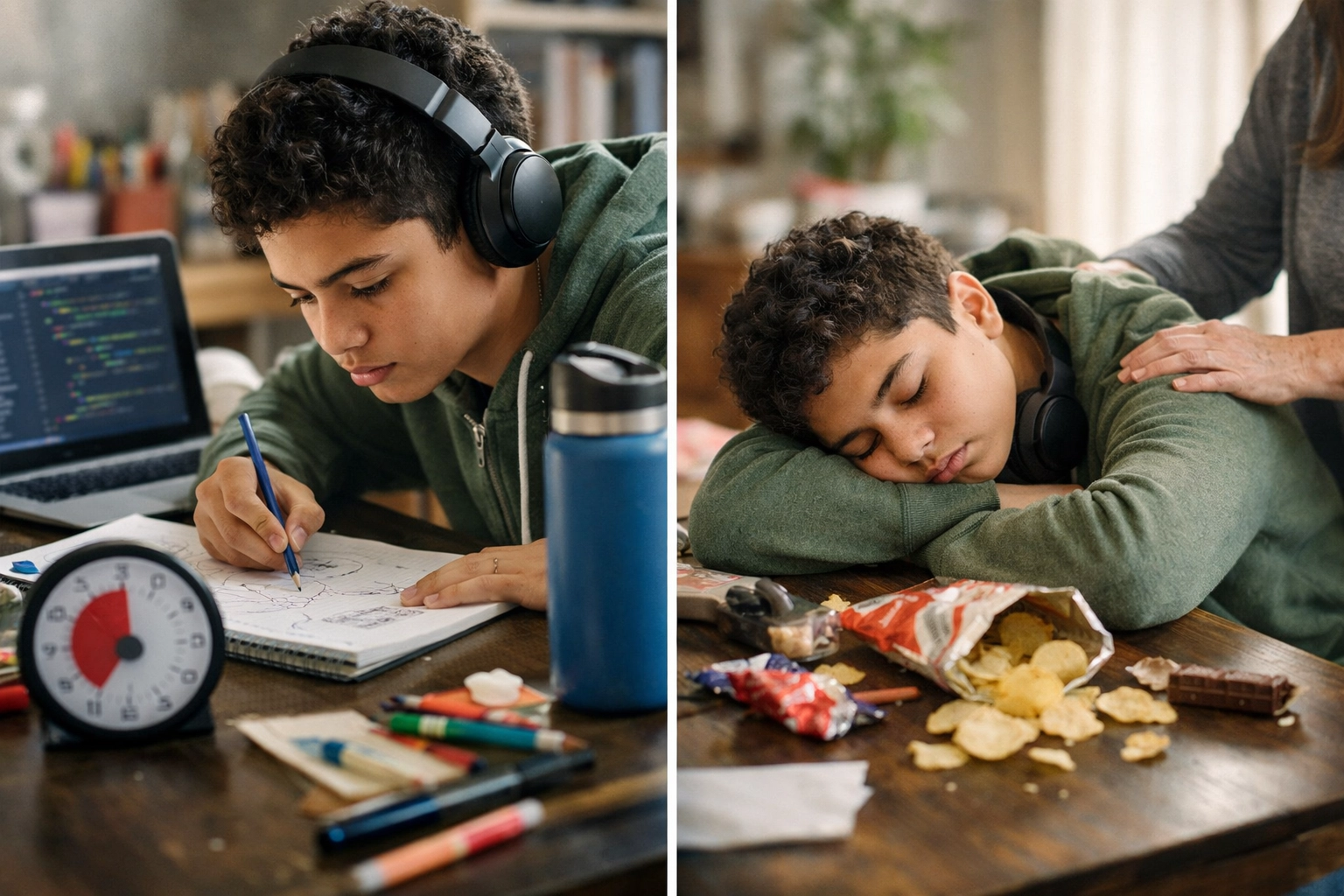
Hyperfocus is often touted as an ADHD superpower, but it has a dark side: the crash. We spend six hours researching the history of vintage fountain pens, forget to eat, forget to pee, and then spend the next two days in a vegetative state because we’ve depleted our dopamine reserves.
The Fix: Set external boundaries. Use "External Brains" like timers or smart home devices to remind you that you are a biological creature with needs. When the timer goes off, we genuinely recommend standing up, stretching, and drinking some water. Transitioning out of hyperfocus is hard, so give yourself a "buffer period" to slowly emerge back into the real world.
7. Waiting for "Willpower" to Save You
We often think, "Tomorrow, I'll just try harder." But ADHD is not a deficit of willpower; it’s a deficit of regulation. Relying on "trying harder" is like trying to start a car that has no gas by screaming at the dashboard.
The Fix: Build a supportive scaffolding. This means using tools, apps, and most importantly, community support. You don't have to do this alone. Whether it's through our membership or exploring resources in our ADHD store, the goal is to create an environment where success is the path of least resistance.
Walking the Path Together
Recovery from ADHD burnout isn't a linear process. There will be days when you feel like you’ve mastered your energy, and days when you realize you’ve been wearing your shirt backward for six hours. Both are okay. We are here to offer you expert guidance and a compassionate space to navigate these challenges.
Remember, you are not "broken" or "lazy." You are a neurodivergent person living in a world built for a different operating system. By thoughtfully identifying these mistakes and gently implementing these fixes, you can begin to unlock your true potential and foster a sense of resilience that lasts.
If you’re feeling overwhelmed and don’t know where to start, please reach out to us. We would be incredibly honored to be a part of your journey toward a calmer, clearer, and more joyful life. You deserve to feel supported, understood, and: above all: cherished.
Let’s stop the burnout loop together. Your brighter tomorrow is closer than you think.
Want to dive deeper into understanding your unique brain? Check out our services for specialized coaching and assessments tailored to you.